20/12/2025
In July 2025, Bangladesh was told to expect calm. After months of political tension and street unrest, a clear promise was made by those in authority: the streets would be stabilised, law and order would be restored, and citizens would be protected from violence—regardless of political belief, religious identity, or social position.
For a population exhausted by uncertainty, this promise mattered. It was not about politics anymore; it was about safety. It was about whether a person could leave home without fear, speak without consequence, or disagree without becoming a target.
What followed, however, was not calm.
It was the exact opposite.
The Promise of Control
The post–July 2025 period was framed as a corrective moment. Official statements spoke of restraint, discipline, and zero tolerance for mob violence. Security forces were positioned as guardians of stability. Leadership rhetoric focused on “restoring normalcy” and “bringing the rule of law back to the streets.”
Internationally, the message was reassuring. Domestically, it raised expectations.
Order, after all, is not an abstract concept. It means that disputes are resolved through courts, not crowds. It means accusations are investigated, not shouted. It means power exists to protect the vulnerable, not to watch silently as harm unfolds.
What Actually Happened
Within weeks, reality began to contradict rhetoric.
Instead of calm streets, reports emerged of growing fear. Instead of restraint, there were mobs. Instead of timely intervention, there was absence—or delay. Incidents of public assault, targeted attacks, and enforced disappearances began to surface with alarming regularity.
In many cases, violence unfolded in open spaces, in daylight, and in front of witnesses. Yet accountability remained elusive. Curfews were often imposed after blood had already been shed. Statements were issued after outrage had peaked. Investigations, when promised, rarely produced visible outcomes.
Order was spoken of constantly. Enforcement was not.
When Law Becomes Selective
What defined this period was not just violence, but selective law.
Victims often fell into familiar categories: political dissenters, ideological opponents, religious minorities, or individuals accused through rumours rather than evidence. In several incidents, mobs acted as judge, jury, and executioner, while formal institutions remained distant or ineffective.
This is not how rule of law collapses suddenly. It erodes quietly—through tolerance of exceptions, through selective inaction, through the normalisation of fear.
When some people are protected by the law and others are not, the law itself loses legitimacy.
The Human Cost Behind the Numbers
Statistics alone cannot capture the damage of this period. Behind every reported death or disappearance was a human life interrupted.
A father who did not return home.
A student punished for an accusation never tested.
A worker whose existence became inconvenient.
Families searched for answers that never came. Silence replaced explanation. In many cases, even acknowledging loss became dangerous.
By conservative estimates, hundreds were affected during this period. But numbers do not carry grief. People do.
A state that claims order while citizens live in fear is not restoring stability—it is managing optics.
Power Without Responsibility
The central contradiction of post–July 2025 Bangladesh lies here: power was visible, but responsibility was not.
Security forces existed, but deterrence failed. Authority was asserted rhetorically, but prevention was weak. Violence was condemned after the fact, not stopped before it escalated.
Leadership is not measured by how strongly it speaks after tragedy, but by how effectively it prevents tragedy from occurring.
When promises are broken repeatedly, people stop listening. And when people stop believing in institutions, disorder becomes self-sustaining.
Why This Matters Beyond Borders
This is not only a domestic concern.
When mob justice replaces legal process, it raises international human rights alarms. When disappearances go unexplained, credibility erodes. When ideology influences enforcement, the state’s moral authority weakens.
Stability cannot be claimed while fear governs everyday life. No country strengthens itself by allowing lawlessness to operate selectively.
A Moral Question, Not a Political One
This is not a debate between parties, nor between belief systems. It is a moral question with a simple core:
If a government promises order but allows mobs to decide guilt, has order truly been restored?
Silence in the face of injustice is not neutrality. It is permission.
Remembering the Broken Promise
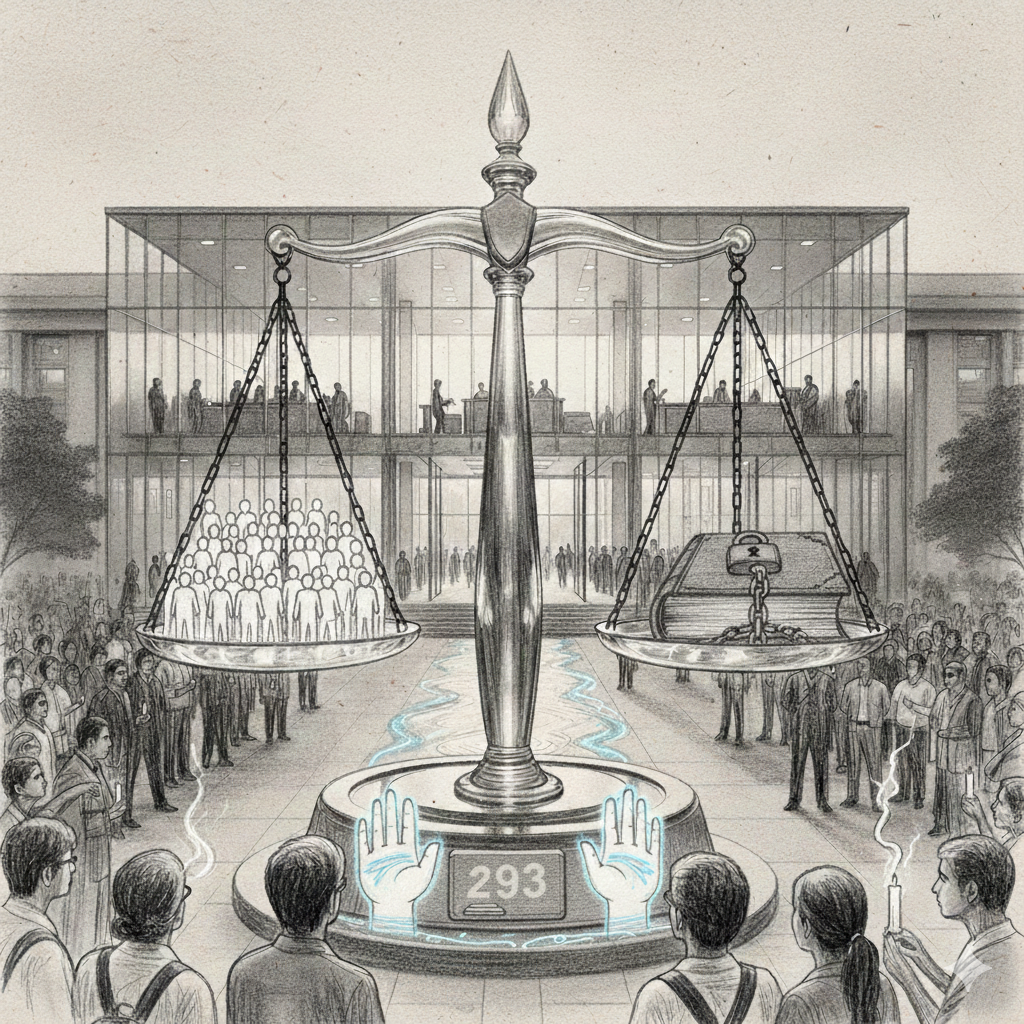
This article is the first in a series documenting 293 victims of post–July 2025 lawlessness—not as statistics, but as human beings whose lives were altered or erased.
The promise was to calm the streets.
The reality was escalating fear.
Until law is applied without favour, without ideology, and without delay, the streets will remember what leaders choose to forget.
This is not the end of the story.
It is the beginning of accountability.
Note:
This image is AI-generated and used to reflect the atmosphere and message of the article. It is not a photograph from the actual incident, but a visual aid to help frame the context.