Published: 23 December 2025
Because 293 is not a statistic.
It is 293 families.
In the previous chapters, we examined how violence unfolded — promises broken, faith misused, rumours weaponised. But now we must ask a harder question:
Who were the people behind those headlines?
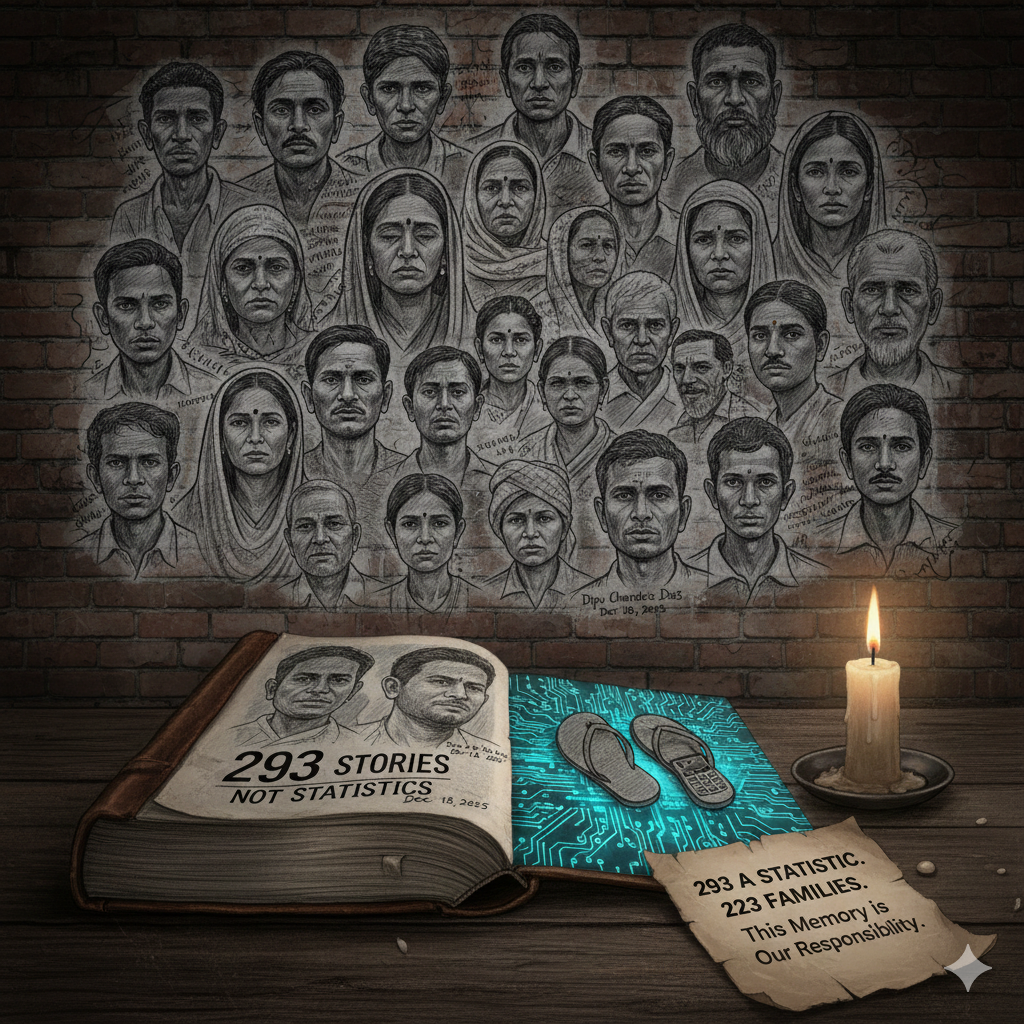
Dipu Chandra Das — Worker, Son, Citizen
Killed: 18 December 2025 — Bhaluka, Mymensingh
He was not a politician.
He was not an activist.
He was not armed.
He was accused. A crowd formed. He died.
Beyond the accusation was a life — employment, family, routine.
When discussing elections, voters must remember that governance is not abstract. It protects workers like him — or fails them.
The “Suspicious Stranger” Cases
Throughout 2025, several individuals attacked over kidnapping rumours were later found to have no link to any crime.
They were travellers. Labourers. Passersby.
They died not because of identity, but because they were alone in the wrong moment.
The state’s responsibility is not only to punish criminals — but to protect the falsely accused.
Minority Families Targeted
In multiple reported incidents, minority households were attacked following religious allegations.
Homes were vandalised. Property destroyed. Fear spread faster than prosecution.
These were not policy debates.
They were families choosing whether to leave their neighbourhoods permanently.
The Voter’s Responsibility
When approaching the national election, the question should not only be:
Who speaks the strongest?
It should be:
Who protects the weakest?
Because governance is measured not by speeches, but by whether a father returns home safely.
If 293 lives were lost in one year, the issue is not only morality — it is institutional reliability.
And institutions are shaped by political leadership.
The Series Moves Forward
Part 5 will examine where law enforcement failed to intervene — and whether those failures were structural, political, or procedural.
Memory is not about anger.
It is about refusing to let names disappear.
Note:
This image is AI-generated and used to reflect the atmosphere and message of the article. It is not a photograph from the actual incident, but a visual aid to help frame the context.
Подарите клиентам и сотрудникам стильный аксессуар — браслеты с нанесением, который подчеркнет ваш бренд.
Он способствует формированию чувства единства у сотрудников и клиентов и укрепляет лояльность.
1win kartani bog‘lash 1win kartani bog‘lash
Краснодар, всем привет Брат снова сорвался Родственники не знают что делать В больницу тащить страшно Короче, единственный кто реально помог — вызов нарколога на дом анонимно с лицензией Приехал через 40 минут В общем, телефон и цены тут — нарколог на дом в краснодаре нарколог на дом в краснодаре Не ждите пока станет хуже Перешлите тем кто в такой же ситуации
Assalomu alaykum, to’rt-besh oydan buyon shu yerda vaqt o’tkazaman, shu sababli fikrimni bo’lishmoqchiman. Ochig’i, avvaliga unchalik ishonmagandim — bundan avval ikkita platformada pul yechishda muammo bo’lgan. 888starz shu paytgacha meni ortiqcha boshog’riq qilmadi.
Slotlar soni rostdan ham ko’pchilikni hayratda qoldiradi — hisoblamadim, biroq taxminan 7000 dan oshadi. Asosan Pragmatic Playning tanish o’yinlarini aylantiraman: Gates of Olympus, Sweet Bonanza. Playn GOdan Book of Dead ham turibdi, Betsoftning yaxshi ishlari ham uchraydi. Bir narsa jonimga tegdi — katalog filtri biroz noqulay, kerakli o’yinni topguncha ancha varaqlaysan.
Live bo’limi menga ko’proq yoqadi. Evolutionning stollari ishlaydi, haqiqiy krupyelar bilan blackjack, ruletka, Crazy Time ham kechqurunlari odam ko’p. Aloqam Toshkentda barqaror, shuning uchun freeze sezmadim, lekin mobil internetda ba’zan sifat pasayadi. Yangi ro’yxatdan o’tganlarga birinchi depozitga 100 foizli bonus hamda 200 ta bepul aylanish taklif qilinadi, wager 35x ga teng — rostini aytsam bu yengil shart emas, shuning uchun men ko’pincha bonussiz o’ynayman. Deposit qilmasdan aksiyalar vaqti-vaqti bilan bo’ladi, joriy takliflarni 888starz uz orqali tekshirib ko’ring.
Registratsiya tez tugadi, eng kam to’ldirish arzimagan — men 10 000 so’m chamasida boshlagandim. Pul kiritish-chiqarishda karta, Skrill, Neteller va Bitcoin va boshqa kripto bor. USDT bilan yechish menda yarim soat oldi, kartaga esa bir sutkacha kutishga to’g’ri keldi. Hujjat tekshiruvi so’ralgan edi, albatta — pasport surati jo’natdim, tez ko’rib chiqishdi.
Smartfonda o’ynash yomon emas, Android uchun ilova to’g’ridan-to’g’ri yuklab olinadi, sayt versiyasi ham yaxshi ishlaydi. Support onlayn chatda ruschada tez javob beradi, o’zbekcha bo’lsa har doim ham emas — mana shu joyi ozgina yoqmadi. Litsenziyasi Kyurasao, demak O’zbekistonda rasmiy tartibga solinmagan — shuni hisobga oling. O’zim har oy budjet belgilab qo’yaman va undan chiqmaslikka harakat qilaman.
chicken road slots chicken road slots
mostbet rabitəbank http://mostbet73048.shop