Minority Vulnerability and Unequal Exposure in 2025
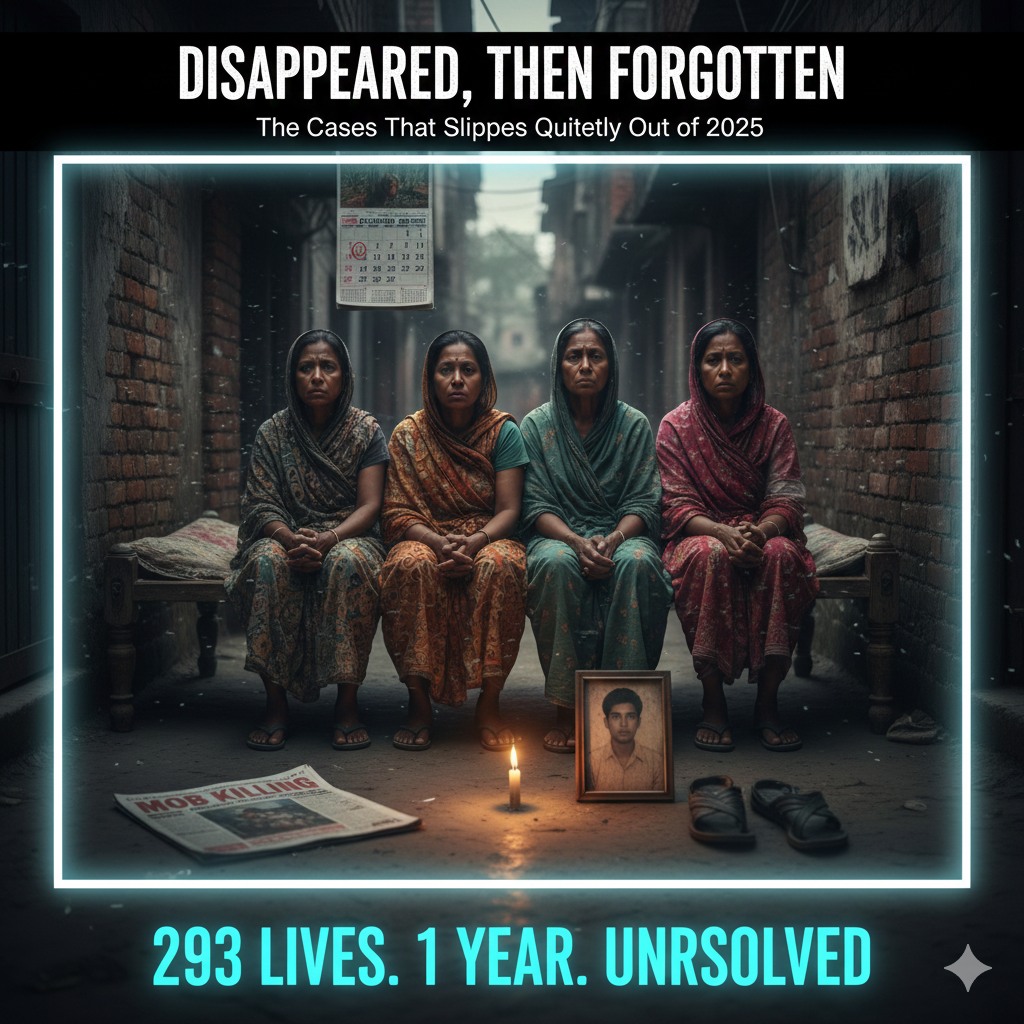
Part 8 of 10 — 293 Lives, One Year
Published: 27 December 2025
Justice is measured most clearly at the margins.
In 2025, as mob violence spread across districts, a difficult pattern emerged: certain communities appeared more exposed than others.
This article does not claim that every mob attack was driven by religious or ethnic identity.
It asks a narrower, more important question:
Were some citizens more vulnerable when law hesitated?
The Dipu Chandra Das Case — A Reminder
On 18 December 2025, Dipu Chandra Das, a young Hindu worker, was killed after being accused of insulting Islam.
His identity did not create the accusation.
But it shaped the environment in which the accusation spread.
In tense environments, minorities often lack protective networks. When rumours escalate, isolation increases risk.
This is not a theory. It is a structural reality in many societies.
Reported Patterns in 2025
Human rights monitoring organisations throughout 2025 reported:
- Religious minorities facing mob violence following blasphemy accusations.
- Property damage targeting minority households during communal tension.
- Slower protective response in some vulnerable localities.
- Reluctance among minority families to pursue prolonged legal action due to fear.
Not every mob incident was identity-driven.
But when identity overlaps with vulnerability, exposure increases.
And vulnerability reveals the strength of institutions.
Protection Is the Test of Governance
A strong rule-of-law system does not protect the majority first.
It protects the vulnerable first.
When minorities feel unsafe reporting threats, when they fear retaliation for filing cases, when they relocate quietly rather than seek justice — something deeper than isolated violence is happening.
Trust is eroding.
In 2025, the question is not whether the state condemned violence.
It is whether protection was consistent.
The Cost of Unequal Confidence
If one group believes it will be protected and another doubts it, the social contract weakens.
Mob violence thrives in environments where:
- Certain identities are easier targets.
- Protective response is uneven.
- Accountability appears selective.
Uniform law is not only a legal principle.
It is psychological stability.
When citizens believe the law applies equally, tension decreases.
When they doubt that, fear spreads faster than rumours.
Why This Matters Before the Election
As Bangladesh approaches a national election, identity politics will inevitably surface.
But voters should look beyond rhetoric.
They should ask:
- Which leadership guarantees equal protection regardless of identity?
- Who has concrete plans to strengthen minority protection mechanisms?
- Who ensures rapid intervention in vulnerable districts?
- Who publishes transparent case updates involving communal tension?
Because governance is not tested in calm times.
It is tested in tense moments.
And 2025 provided many tense moments.
The Hard Truth
The 293 deaths reported in mob-related violence this year did not all target minorities.
But when even a portion of them disproportionately affected vulnerable communities, it exposed institutional strain.
The measure of a state is not how it treats the powerful.
It is how it shields those without power.
If elections are about shaping the next chapter, then memory must include the margins.
What Comes Next
Part 9 will examine prosecution outcomes — how many cases moved forward, how many stalled, and what that reveals about accountability capacity.
Because justice is not complete until it is visible.
Note:
This image is AI-generated and used to reflect the atmosphere and message of the article. It is not a photograph from the actual incident, but a visual aid to help frame the context.
তোর কারণে আশেপাশের লোকজন বিপদে পড়বে।