Three Moments in 2025 That Should Shape How We Vote
Published: 22 December 2025
If 2025 taught Bangladesh anything, it is this:
A rumour can move faster than the law.
This is not a philosophical claim. It is a timeline.
As the country approaches a national election, voters should not rely on slogans or speeches. They should rely on memory — specific memory.
Because memory is evidence.
And 2025 left evidence.
18 December 2025 — Bhaluka, Mymensingh
Dipu Chandra Das.
A young Hindu worker.
On 18 December 2025, he was accused by co-workers of making derogatory remarks about Islam. The allegation spread rapidly. A crowd formed. He was beaten severely and later died from his injuries.
Subsequent police reporting indicated that investigators had not found confirmed evidence supporting the accusation.
But by the time that information emerged, he was already dead.
Look at the order of events:
Accusation.
Crowd.
Violence.
Investigation.
The investigation came after the outcome.
This is not just a tragic incident. It is a structural warning.
Mid-2025 — Kidnapping Rumours Across Districts
Throughout 2025, multiple mob assaults were triggered by rumours of child kidnapping circulating on social media.
In several documented cases, individuals were beaten publicly after being labelled “suspicious strangers.” Later police clarification indicated no confirmed kidnapping activity tied to the victims.
The pattern repeated across districts:
Viral message.
Panic.
Identification of a target.
Public beating.
Official clarification.
The clarification never travels as far as the rumour.
And it never heals the injured.
Religious Tension and Property Attacks
Human rights monitors in 2025 also documented cases where religious accusations or online inflammatory posts triggered attacks on individuals and properties before verification.
In some instances:
- Homes were vandalised before investigations began.
- Arrests were limited or delayed.
- Prosecution outcomes remained unclear.
Again, the structure did not change:
Emotion first.
Evidence later.
When that sequence repeats across months and regions, it stops being coincidence.
It becomes governance weakness.
The Real Pattern of 2025
These incidents were not identical. They did not share the same victims or districts.
But they shared a sequence.
Justice was inverted.
In a functioning system, this is the correct order:
Allegation.
Immediate protection.
Investigation.
Legal determination.
Public transparency.
In too many cases in 2025, the order was reversed:
Allegation.
Mobilisation.
Violence.
Statement.
Silence.
That inversion is not accidental. It reflects delayed intervention, weak deterrence, and inconsistent enforcement.
293 Dead — What That Number Actually Means
By the end of 2025, rights organisations reported approximately 293 deaths linked to mob violence during the broader period of unrest.
Not all were driven by religion.
Not all were driven by politics.
But many were driven by something equally dangerous:
Speed without verification.
When a state cannot slow down a rumour before it becomes a riot, the state is losing its timing.
And timing saves lives.
Why This Must Matter Before the Election
Elections are not only about promises.
They are about systems.
Voters must ask:
- Who will ensure police intervene within minutes, not hours?
- Who will implement rapid-response verification systems for viral accusations?
- Who will guarantee transparent prosecution updates?
- Who will strengthen local intelligence monitoring of misinformation?
- Who will protect the accused before the crowd reaches them?
The lesson of 2025 is not ideological.
It is structural.
If 293 people died in mob violence in one year, the issue is not simply morality. It is enforcement capacity.
And enforcement capacity is shaped by leadership.
What Citizens Must Remember
A society does not become violent overnight.
It becomes violent when:
- Rumours spread unchecked.
- Police hesitate.
- Accountability fades.
- Silence follows.
2025 showed us something uncomfortable:
A rumour can kill.
A delay can kill.
A lack of transparency can encourage repetition.
But it also showed something hopeful.
Citizens still choose who governs them.
This series is not about telling anyone whom to vote for.
It is about reminding voters what happened — so that when they stand in the voting booth, they remember:
Did law arrive before the crowd?
If the answer is no, repeatedly, then promises are not enough.
Memory is not anger.
Memory is responsibility.
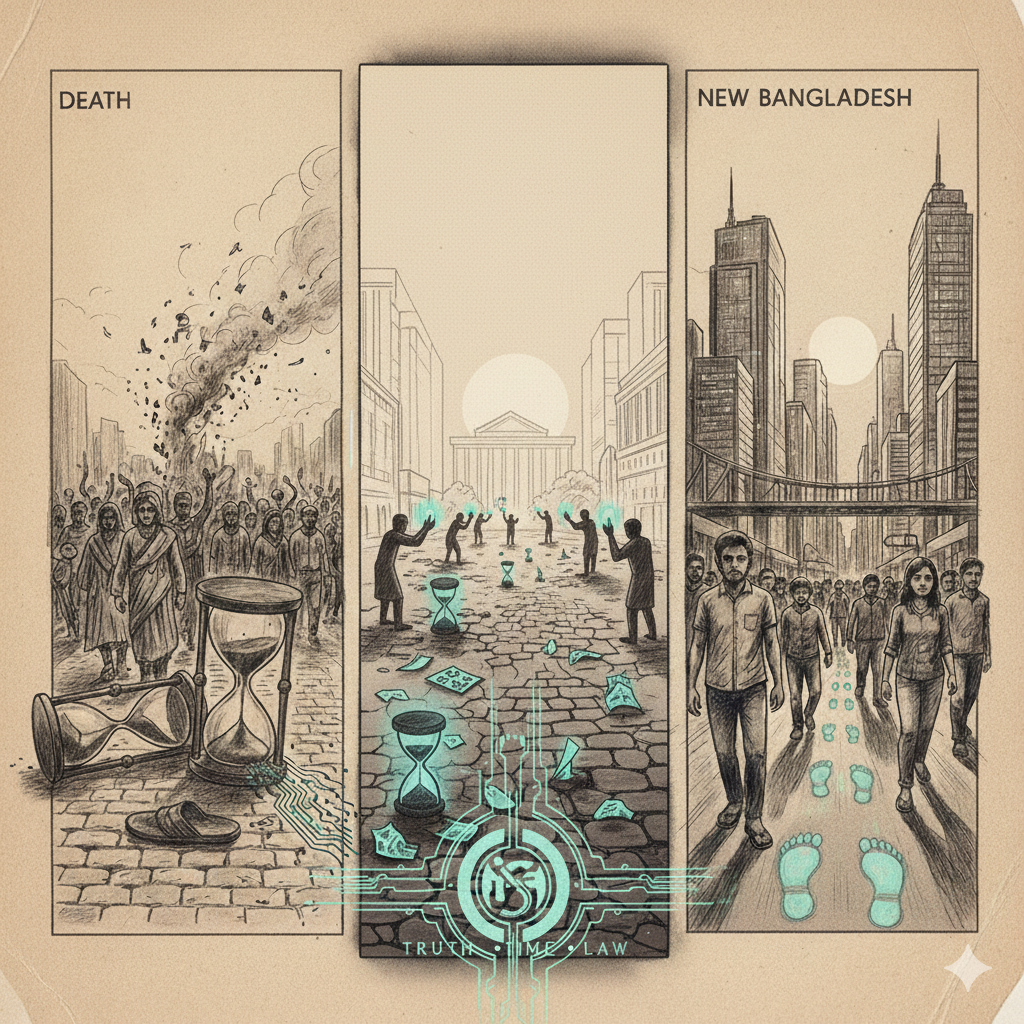
Note:
This image is AI-generated and used to reflect the atmosphere and message of the article. It is not a photograph from the actual incident, but a visual aid to help frame the context.