Published: 25 March, 2026
The dust of the revolution had barely settled. The blood of the martyrs—students and citizens who stood before bullets to end a fifteen-year tyranny—was still staining the streets of Dhaka when the promises of “reform” began to feel like a familiar, bitter pill.
We were promised a new dawn. Instead, we are staring at a cabinet reshuffle that feels less like progress and more like a calculated heist of our national sovereignty. The appointment of Dr. Khalilur Rahman as Foreign Minister isn’t just a political choice; it is a middle finger to the transparency this government claimed to uphold.
The Urgency of a Shadow
What was the fire, the absolute emergency, that compelled the current leadership to hand the keys of our international relations to a man shrouded in a thick fog of scandal?
Khalilur Rahman—or should we call him “Roger Rahman,” the identity he allegedly donned while seeking asylum in the West?—is not a symbol of the “New Bangladesh.” He is a walking dossier of controversy. From the chilling 2001 allegations involving the death of protocol officer Ayesha Afsari to the whispered reports of his dual citizenship, his background is a minefield.
A government born from a movement against corruption and opaqueness has chosen a man who, during his brief stint as National Security Adviser, managed to clash with our own military leadership over “humanitarian corridors” that looked suspiciously like foreign-interest security pipelines.
The Whimsical Rot of Leadership
We must ask the Chief Adviser and the current administration: Where is the logic?
- You claim to be technocratic, yet you appoint a man accused of manipulating the very election process that was supposed to return power to the people.
- You claim to be sovereign, yet you bench the concerns of the Bangladesh Army to accommodate a figure seen by many as a proxy for Western energy and security interests.
This isn’t governance; it is whimsical authoritarianism. It is the same “because I said so” energy that defined the Hasina era. We see the same pattern emerging: the insulation of “favorites,” the ignoring of public outcry, and the elevation of individuals whose primary qualification is their utility to hidden agendas rather than their service to the Bangladeshi people.
Replacing One Monster with Another?
The most terrifying realization for any revolutionary is the moment they realize the guillotine has simply changed hands.
The signs of fascism aren’t always found in mass arrests; they are found in the erosion of vetting, the silencing of dissent within the ranks, and the appointment of “untouchables” to vital ministries. By shielding Khalilur Rahman from the serious questions regarding his past and his foreign allegiances, this government is mirrors the exact cronyism that led to the July uprising.
If we remain silent while a man with a “Roger Rahman” alias dictates our foreign policy, we aren’t building a democracy; we are just decorating a new cage.
Bangladesh didn’t bleed to replace a “Queen” with a “Shadow.” We demanded accountability. If the present leadership cannot justify the urgency of Khalilur’s rise, they aren’t leading a transition—they are leading a betrayal.
Note:
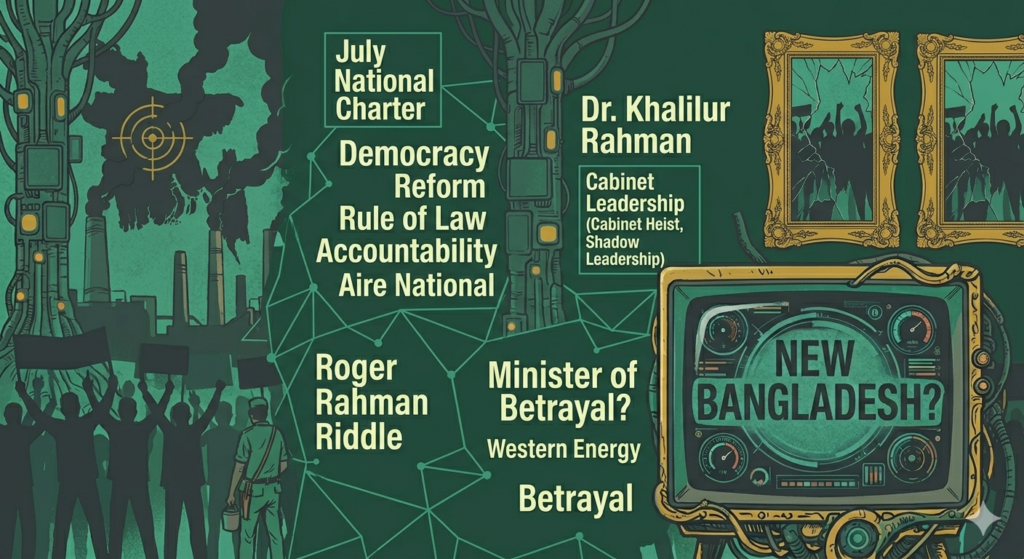
This image is AI-generated and used to reflect the atmosphere and message of the article. It is not a photograph from the actual incident, but a visual aid to help frame the context.