Can Transparency Survive a Credibility Crisis?
Published: 14 February 2026
Bangladesh has long claimed democracy.
But claiming democracy and practicing it are not the same.
For decades, politics in Bangladesh has followed a pattern:
Elections are held. Results are declared. Victory is celebrated.
And soon after, accusations follow.
Allegations of corruption.
Allegations of abuse of power.
Allegations of manipulation.
This is not new. It did not begin in 2025.
Both major political forces in the country have faced credibility crises at different times. BNP governments in the past left office under serious corruption allegations. Awami League administrations have also faced accusations of electoral unfairness and institutional control.
So when allegations arise about counting irregularities in the most recent election, the issue is larger than one party.
It is about trust.
Democracy as Advertisement
In Bangladesh’s political history, democracy has often been presented as an event rather than a system.
Election day becomes the symbol of democracy.
But democracy is not the voting line.
It is what happens afterward.
- Are result sheets transparent?
- Are disputes resolved independently?
- Are recounts conducted without political interference?
- Are courts empowered to overturn irregularities?
If these processes are weak, democracy becomes branding — not governance.
The BNP Question
It is true that BNP, during previous periods in power, faced multiple corruption allegations and governance criticisms.
It is also argued by some observers that after the July uprising, BNP figures began behaving as if electoral victory was already assumed — despite limited central leadership role in the initial movement.
These perceptions matter.
Because credibility is political currency.
If a government’s past record includes corruption scandals, and if it appears to exercise power before formal consolidation, then demands for transparent recounts face a psychological barrier:
Will citizens believe the process is neutral?
This does not prove recounts would be manipulated.
But it raises a rational concern:
Transparency requires not only procedural fairness — but reputational strength.
Is Transparent Recount Possible Under a Controversial Government?
Yes, it is possible.
But only if institutions are stronger than parties.
In functioning parliamentary democracies, recount credibility depends on:
- Independent election commissions
- Non-partisan returning officers
- Judicial oversight
- Public release of polling-station level data
- Access for observers
If these structures are insulated from ruling-party influence, transparency can survive even controversial leadership.
If they are not, suspicion becomes automatic — even if the result is accurate.
That is the core problem in Bangladesh’s political culture.
Trust is fragile because institutions are historically politicised.
The Deeper Issue: Institutional Weakness
The debate over whether counting was fair is not really about numbers.
It is about institutional independence.
Bangladesh’s political tradition has often prioritised:
Winning over reform.
Control over credibility.
Announcement over accountability.
Until institutions operate independently of ruling-party culture, every election will face doubt — regardless of which party governs.
Visible Verification Is the Only Exit
Allegations must be investigated — not because they are automatically true, but because visible investigation restores confidence.
If a government truly wants to demonstrate democratic maturity, it should:
- Publish polling-station level results online.
- Allow independent audits.
- Fast-track recount petitions.
- Invite neutral observers to review disputed constituencies.
- Release prosecution or disciplinary findings transparently if irregularities are discovered.
Strong governments are not afraid of recounts.
They use them to strengthen legitimacy.
The Real Question for Citizens
The question is not:
Is BNP corrupt?
Is the previous government worse?
The real question is:
Are we building institutions that survive whichever party wins?
If democracy depends on who is in power, it is not democracy.
If transparency depends on reputation, it is not transparency.
Bangladesh has practiced democracy as an announcement for decades.
The next chapter must practice democracy as a system.
Because trust does not come from victory.
It comes from verification.
Note:
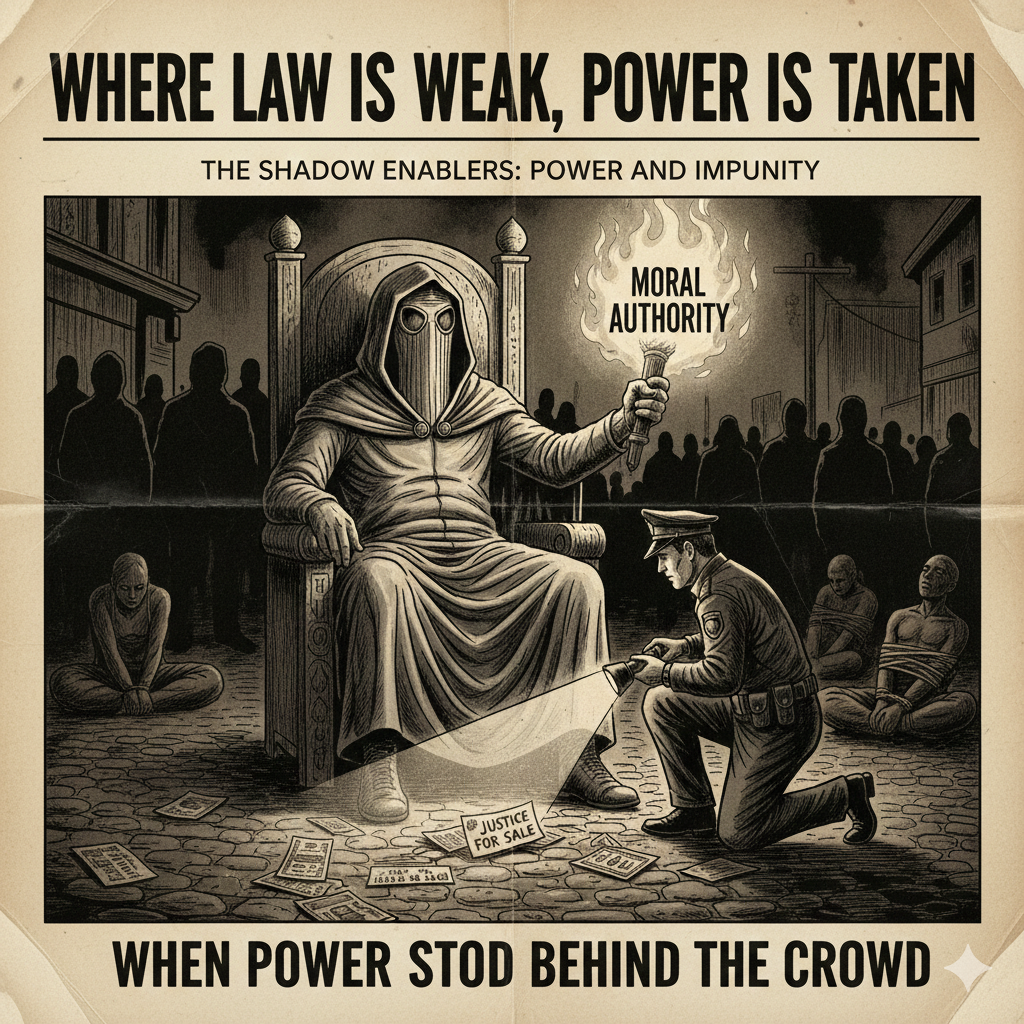
This image is AI-generated and used to reflect the atmosphere and message of the article. It is not a photograph from the actual incident, but a visual aid to help frame the context.